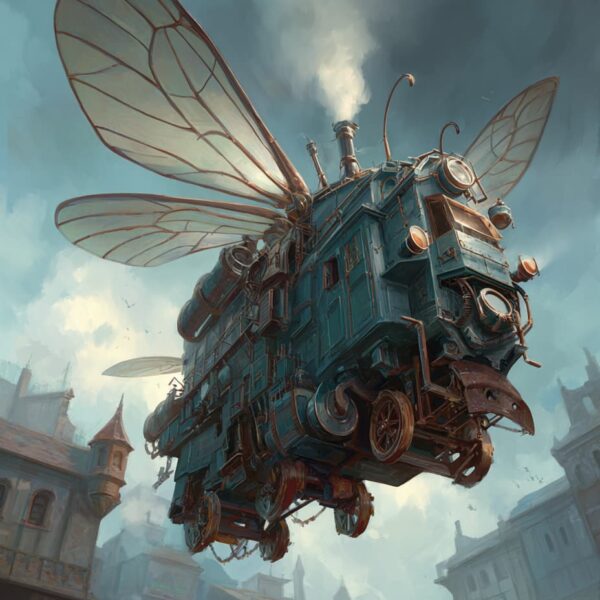
Public transport history is full of strange, ambitious, and sometimes forgotten ideas. Not all transport concepts failed because they were poorly designed. Many disappeared simply because they appeared too early. Technology was not ready, infrastructure was missing, or society did not yet understand the need for such solutions. Looking back, these early transport ideas feel surprisingly familiar, as many of them are now being revived in modern form.
Early Electric Transport Before the Electric Age
Electric transport is often seen as a recent trend, yet electric buses, trams, and cars existed long before gasoline engines dominated the streets. At the beginning of the twentieth century, electric vehicles were quiet, clean, and easy to operate. Some cities even tested electric buses for urban routes.
The problem was not the idea itself, but the surrounding conditions. Batteries were heavy and inefficient, charging networks were rare, and electricity generation was limited. Fuel-powered vehicles became cheaper and more flexible, pushing electric transport into the background. Only decades later, with improved batteries and environmental pressure, electric public transport finally found the environment it needed to succeed.
Monorails That Promised Too Much
Monorails once symbolized the future of urban mobility. Elevated above traffic, they were meant to be fast, modern, and space-efficient. Many cities seriously considered replacing buses or trams with monorail systems.
However, early monorails were expensive to build and difficult to integrate into existing street layouts. Switching tracks was complex, capacity was limited, and maintenance costs were high. Cities were not ready to redesign their transport systems around a single elevated solution. While monorails still exist today, their early visions were far ahead of what cities could realistically support.
Automated Transport Before Computers Were Ready
The idea of driverless transport is not new. As early as the mid-twentieth century, engineers imagined automated buses and small passenger pods operating without human drivers. These concepts promised efficiency, safety, and lower operating costs.
At the time, automation relied on fixed infrastructure such as guide rails, magnets, or wired roads. These systems were expensive and inflexible. Computers were too slow, sensors too basic, and software too unreliable. Without modern processing power, early automation could not handle real-world conditions. Only recent technological advances allowed similar ideas to return in the form of autonomous vehicles.
High-Speed Rail Concepts Without the Right Foundations
High-speed rail may feel like a modern achievement, but early proposals appeared long before it became practical. Engineers imagined trains moving at extreme speeds while tracks, signaling, and braking systems were still designed for much slower travel.
Early rail infrastructure simply could not support such speeds safely. Accidents, vibrations, and technical limitations made high-speed operation unrealistic. When electric traction, precision engineering, and advanced safety systems finally arrived, the original ideas proved correct. The vision was right, but the timing was wrong.
Airships as Passenger Transport
Passenger airships once represented a bold alternative to early airplanes. They offered long-range travel, smooth flight, and spacious interiors. In theory, airships were well suited for transporting people over long distances.
In practice, airships were vulnerable to weather and suffered from several dramatic accidents. Public confidence collapsed, and fixed-wing aircraft quickly became the preferred option. Even though modern materials could improve airship safety, early failures permanently damaged their reputation. This transport idea was not technologically impossible, but socially unacceptable at the time.
Urban Cable Transport Before It Was Accepted
Cable cars and gondolas are now used in several cities as practical public transport solutions. However, early proposals to introduce cable systems in urban environments were often rejected. They were seen as tourist attractions rather than serious transport.
Cities worried about visual impact, capacity limits, and unfamiliar technology. Only when congestion increased and street space became scarce did attitudes change. Today, urban cable transport is recognized as a useful solution in specific conditions, proving that early skepticism was more cultural than technical.
Hybrid Vehicles Without Clear Purpose
Throughout transport history, engineers experimented with hybrid vehicles that combined features of buses, trams, trains, or even boats. Some designs ran on roads and rails, others could operate on land and water.
Many of these vehicles failed because they tried to do too much. Infrastructure was not standardized, maintenance was complex, and operating costs were high. Without clear advantages over existing systems, hybrids struggled to justify their existence. In many cases, technology was not advanced enough to make these combinations efficient.
Environmentally Friendly Transport Before Demand Existed
Transport concepts focused on sustainability appeared long before environmental concerns became mainstream. Solar-powered vehicles, energy-efficient buses, and alternative fuels were proposed decades ago.
At the time, fuel was cheap, emissions were rarely regulated, and public awareness was low. Without political support or economic incentives, these ideas attracted little investment. Today, many early environmental concepts are being rediscovered as cities search for cleaner transport solutions.
Why Timing Matters in Transport Innovation
What connects all these ideas is not failure, but misalignment with their time. Transport systems depend on technology, infrastructure, economics, and public acceptance working together. When even one element is missing, innovation struggles to survive.
Many transport ideas that once seemed unrealistic now feel logical and necessary. Their early versions were not wrong, just premature. Cities and engineers often need decades to catch up with bold ideas.
Looking Back to Understand the Future
Transport history shows that unusual ideas rarely disappear forever. They wait, evolve, and return when conditions change. For enthusiasts of unusual transport, these early experiments are reminders that innovation is not linear. Some of today’s strange transport concepts may simply be waiting for their moment.
On sites like sydneybusmuseum.info, these stories matter because they reveal how imagination, limitation, and timing shape the way people move. Yesterday’s failed ideas often become tomorrow’s solutions.